
4 Models Compared: Which CCTV Solar Power System Fits Your Load?
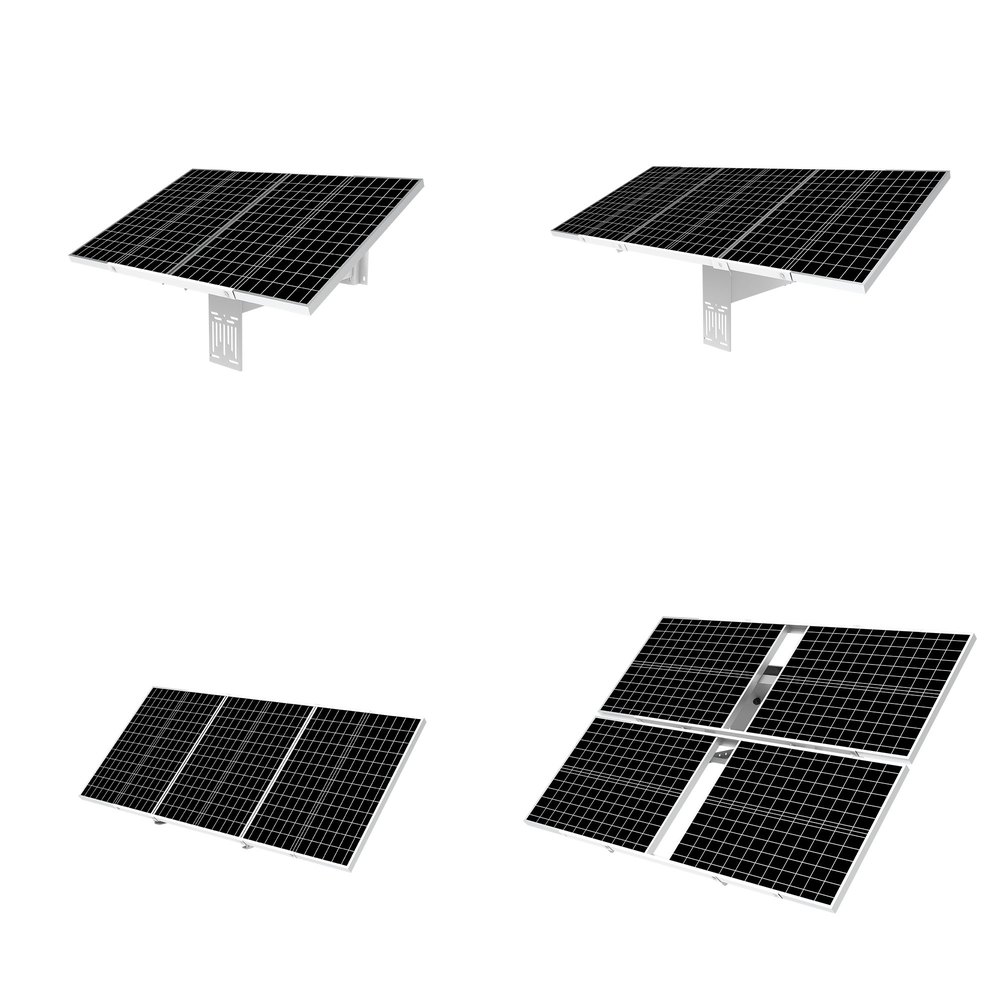
Four standard sizes, one range: YO-M8040, YO-P12060, YO-P12060-T and YO-P240120. They share the same output, the same protection rating and the same battery chemistry — so choosing between them is not about picking the “best” one, it is about matching panel, battery and mounting to your load list and your site. This page puts all four side by side and shows which job each one is built for.
Q: How do I choose a solar power system for a camera?
A: Add up the continuous watts at one point — cameras, router, anything else on DC 12V — then match that figure to a rated load band: ≈24–40 W on the YO-M8040, ≈32–56 W on the YO-P12060, the same band on the YO-P12060-T with a heavier pole bracket, and ≈40–45 W on the YO-P240120 when your climate has long grey stretches. Keep the total under 60 W (5 A at DC 12V), then let the worst month at your site pick between the panel and battery sizes. Before either of those, the output has to suit the camera, and what a 12 V camera draws from it is the figure that decides.
What All Four Share (So You Can Stop Comparing It)
Every size in the range is a complete package — panel, battery, controller and bracket — and the electrical output is identical across the range. That settles a lot of questions before they start:
- Output: DC 12V through a 5.5 × 2.1 mm DC5521 plug, up to 5 A — a continuous load ceiling of 60 W at one point on every model
- Battery chemistry: 18650 ternary lithium in a sealed box, UN38.3 tested for transport
- Protection: IP65 on the sealed battery box; battery BMS protection range −20°C to 60°C
- Panel cells: mono crystalline, 22–24% efficiency, 3.2 mm tempered glass
- Warranty: panel 5 years, battery 2 years
So the differences that actually decide the order are four: panel wattage, battery capacity, load band and mounting hardware. Everything else is the same supplier conversation. A load band is not a guess either: the real draw behind the load band is what decides which band a site falls into.
The Load Band Is the Row That Chooses the Model
Panel watts are the figure most listings lead with, and the least useful one to choose by. So how to choose a solar power system for camera loads in practice: read the band row first, because it is quoted against real reference devices rather than against the sun:
| Model | Rated load band | Reference devices in that band |
|---|---|---|
| YO-M8040 | ≈24–40 W | ≈2–4 mid-size PTZ (ref. 8 W each) + router, or 1 camera + recorder-class extras |
| YO-P12060 | ≈32–56 W | ≈3–6 mid-size PTZ + router |
| YO-P12060-T | same band as P12060 | identical power core — the T is about the bracket, not the watts |
| YO-P240120 | ≈40–45 W | ≈6–7 low-power PTZ (ref. 5 W each) + router; chosen for climate, not camera count |
A band is a rating, not an arithmetic output. A list built from real datasheets lands as a range, not a point — two mid-size PTZ plus a router is 18–28 W. Send us the actual models and we will place the list precisely, rather than have you guess between bands.
Notice what the bands do not do: they do not rank the models from weak to strong. The YO-P240120 carries the biggest panel and battery, yet its band tops out at ≈45 W — lower than the P12060’s 56 W — because its extra capacity is designed to carry a moderate load through long grey stretches, not to feed the largest possible load list. That distinction is the single most common thing buyers misread, and it comes straight from the difference between power and energy: the band is about continuous watts, the battery is about days.
Which Model for Which Job
| Your situation | The pick | Why |
|---|---|---|
| One camera point, lighter list a gate, a shed, a small yard |
YO-M8040 | 80 W of panel and 40 Ah of battery cover a single point comfortably in most sunny and temperate climates, and it is the lightest package to ship and mount. Rated 4–5 days backup at a ≈15 W reference load. |
| Two or three camera views at one point a yard corner with several approaches |
YO-P12060 | The 32–56 W band is the widest in the range, so a list that grows by a camera next spring still fits. Two cameras share the system only if the combined continuous load stays within the 60 W output limit and the voltage, connectors and cable runs are suitable. |
| Same list, but the install is a pole on open ground a fence line, a feedlot, a dark road |
YO-P12060-T | Same 120 W / 60 Ah power core, heavier triangle bracket for pole mounting where there is no wall to bolt to. You are buying mounting hardware, not watts. |
| Long grey stretches or a heavier always-on load monsoon coasts, hard winters, router-heavy points |
YO-P240120 | 240 W in a 2 × 2 array and 120 Ah of battery: the largest energy reserve in the range, built to hold a moderate load through weeks of net-negative days. |
Camera counts in the reference rows are worked examples, not promises about how many cameras any system supports — the load list in watts decides, always.
Three Differences the Table Barely Shows
1. The T is a mounting decision, not a power decision
Buyers compare YO-P12060 and YO-P12060-T as if one were an upgrade. It is not: same panel, same battery, same band. The T exists for the site where there is nothing to bolt the standard bracket to — a pole in open ground, a fence corner, a feedlot — and the heavier triangle bracket is what makes that install sound. Choose it for the site, not the specs.
2. The P240120 changes the install footprint
Four 60 W panels in a 2 × 2 array cover more area than a single-panel mount, which matters on a narrow pole top or a cramped wall. It is not harder to install — but it wants a site with the room, and a little more care aiming the array clear of shading.
3. Weight and weather exposure live in the brackets, not the brochure
A bigger panel at a steeper winter tilt presents more surface to the weather, and a heavier battery wants a mount that was designed for it. Each standard size ships with the bracket matched to its own hardware, which is the quiet argument for buying the complete package rather than mixing a panel here with a battery there.
The Two Ways Buyers Get This Choice Wrong
Choosing by panel watts
“Bigger panel, better system” is true only if the battery and the load band come along. A 240 W panel on a load list of 15 W buys energy the site cannot store, and a 80 W panel on a 50 W list buys a brownout. The band decides; the panel supports it.
Choosing by camera count
“Four cameras = the biggest model” fails in both directions. Four low-power fixed cameras at 5 W each sit lighter on the range than two PTZ units with IR running, and a recorder or router shifts the list more than a camera does. Count watts, not cameras — the four-step sizing method takes about ten minutes and settles it.
Quick Answers
How to choose solar power system for camera size in one pass?
Is a 240W solar system better than a 120W one for cameras?
Can two cameras share one system?
One Model, Quoted FOB China
Tell us the camera models, how many sit at each point, and whether a router shares the point. We will name one of the four sizes, confirm it against your worst-month sun, and quote it FOB China. We are not the factory — we supply these standard systems, so if none of the four genuinely fits we will say so.
Pick my model
Send the load list. We will place it in a band, name one standard size and confirm the mounting hardware for your site — typically within 24 hours.
Name My ModelSee the full data
Panel configuration, battery, output, bracket and warranty for every standard size, on the product pages — the figures behind every card on this page.
Browse the Four SystemsMinimum order 2 pcs · FOB China · Payment is 100% in advance, by T/T bank transfer · Standard models · Typical lead time ~15 days
Four more site types now have pages of their own, and the load table method on this page runs on each of them unchanged: solar power for greenhouse monitoring for ranges under film, solar power for forest fire watch camera for ridge points, solar power for coastal surveillance camera for shore positions, and solar powered wifi hotspot for coverage points.
Park points, from entrance stations to overlooks, are sized with the same arithmetic and an extra variable, the closed season: solar power for national park camera works that case.
Rural tower sites, where the radio and the camera share one pole, run the same arithmetic with a heavier radio line: solar power for rural internet tower works that site.
Campsites and event grounds run the same arithmetic with a calendar on top: solar power for camping camera sizes the point for the busy weekend and the empty weeks.
Mine sites run the same arithmetic with dust and relocation on top: solar power for mining site camera sizes the point for the dusty week and the moving face.
When several of these site types sit along one route, power planning along a corridor treats the points as one portfolio instead of separate builds. Before the sites multiply, the camera-count worked examples settle what one pole carries at the first point.
Well pads run the same arithmetic with the pumper round on top: solar power for oil and gas well pad camera sizes the reserve from the visit interval. What those visits should actually cover is listed under what a year of upkeep involves.
Substations run the same arithmetic with open sight lines that flatter a single corner: solar power for substation cameras sizes the point from the inspection interval.
Pump stations run the same arithmetic with the meter round on top: solar power for pump station cameras sizes the reserve from the longest gap between visits.
How to Size a Solar Power System for a CCTV Camera
The four-step method that produces the load list this comparison is built on: load, daily energy, battery, panel, with worked examples.
Where These Systems Are Used
Farm gates, construction entrances, ponds, orchards and long fence lines: the site types each standard size was shaped by.
Questions About Output, Cameras and Shipping
Short answers on the 60 W output limit, camera counts, lead times and freight for all four models.
Cloudy Days and Cold Nights: How Long It Really Runs
Battery-only hours versus rainy-day autonomy, and what cold weather does to both, the runtime question every buyer asks after the sizing is done.